
In the world of interior design, the kitchen stands as one of the most significant spaces in any home. It serves not only as a functional area for cooking and meal preparation but also as a gathering spot for family and friends.
Thoughtful design in this space can transform a mundane kitchen into an inspiring environment that reflects personal style and lifestyle needs. One such captivating design philosophy is Wabi Sabi, a Japanese aesthetic that finds beauty in imperfection and transience.
By embracing the natural variations in materials and the passage of time, Wabi Sabi invites a sense of tranquility and authenticity into the home.
This article will explore various Wabi Sabi kitchen designs, each uniquely embodying this philosophy through the use of natural materials, textures, and colors. From weathered wood islands to handmade ceramic fixtures, these design concepts offer a fresh take on the traditional kitchen, fostering a connection to nature and a deeper appreciation for the artistry of everyday objects.
Let’s dive into these inspiring ideas that celebrate the beauty of imperfection.
1. The Weathered Charm of a Wooden Island
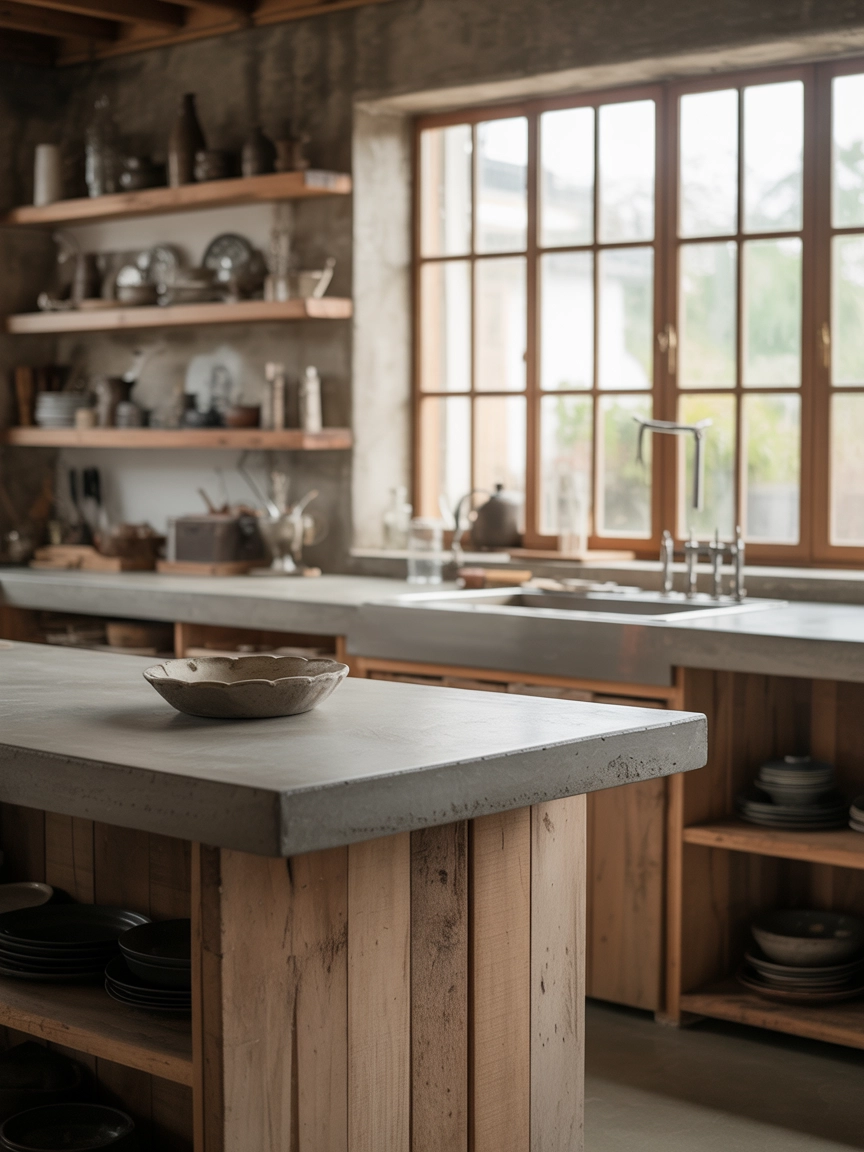
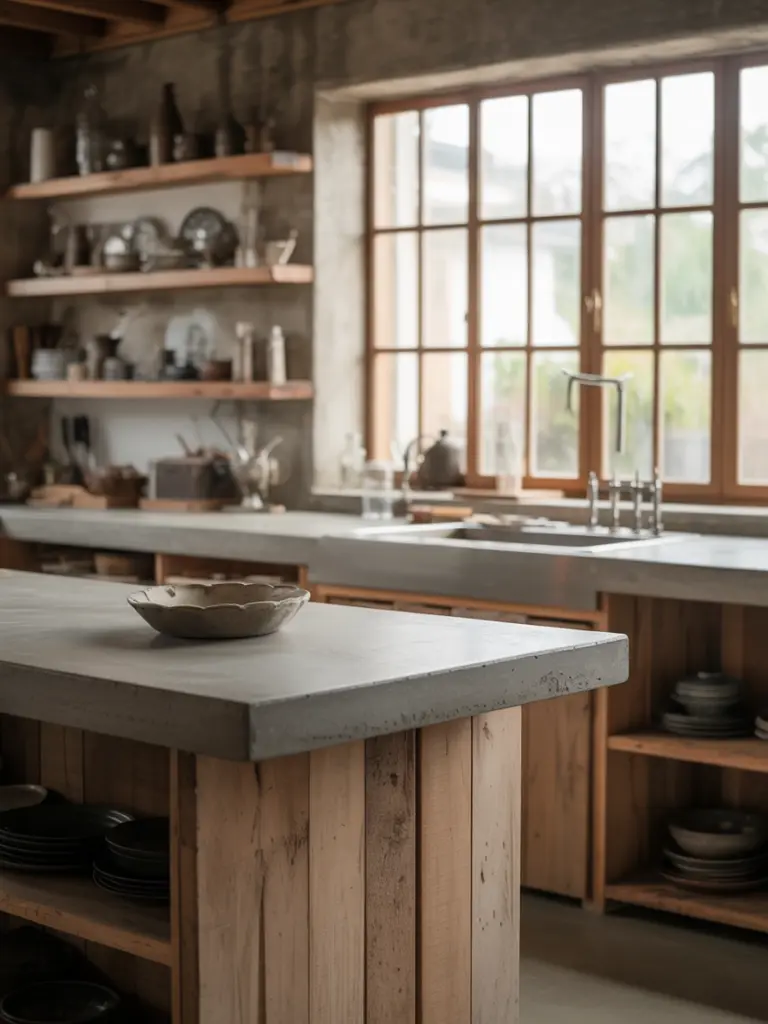
Imagine stepping into a Wabi Sabi kitchen where a stunning weathered wooden island takes center stage. Its surface, marked by the scars of time and use, tells a story of its own.
The island is complemented by a rugged concrete countertop, offering a contrast between the warmth of wood and the coolness of stone, enhancing the textural play within the space. Open shelving lines the walls, displaying an array of handmade ceramic dishes and antique utensils, each piece showcasing its own imperfections.
Natural light floods the kitchen through a large window, highlighting the textures of the aged wood and rough concrete, creating an inviting atmosphere.
The combination of rustic elements and organic materials creates a nurturing environment, perfect for cooking and entertaining. The light filtering through the window casts soft shadows that dance across the surfaces, adding depth and warmth.
Here, the kitchen becomes an organic extension of the home, where the beauty of the unfinished reigns supreme.
- Select reclaimed wood for your island to add character and uniqueness.
- Incorporate a concrete countertop for an industrial yet earthy feel.
- Display handmade ceramics to emphasize craftsmanship and individuality.
- Maximize natural light to enhance textures and create a warm ambiance.
2. Simple Elegance with a Hand-Built Clay Sink
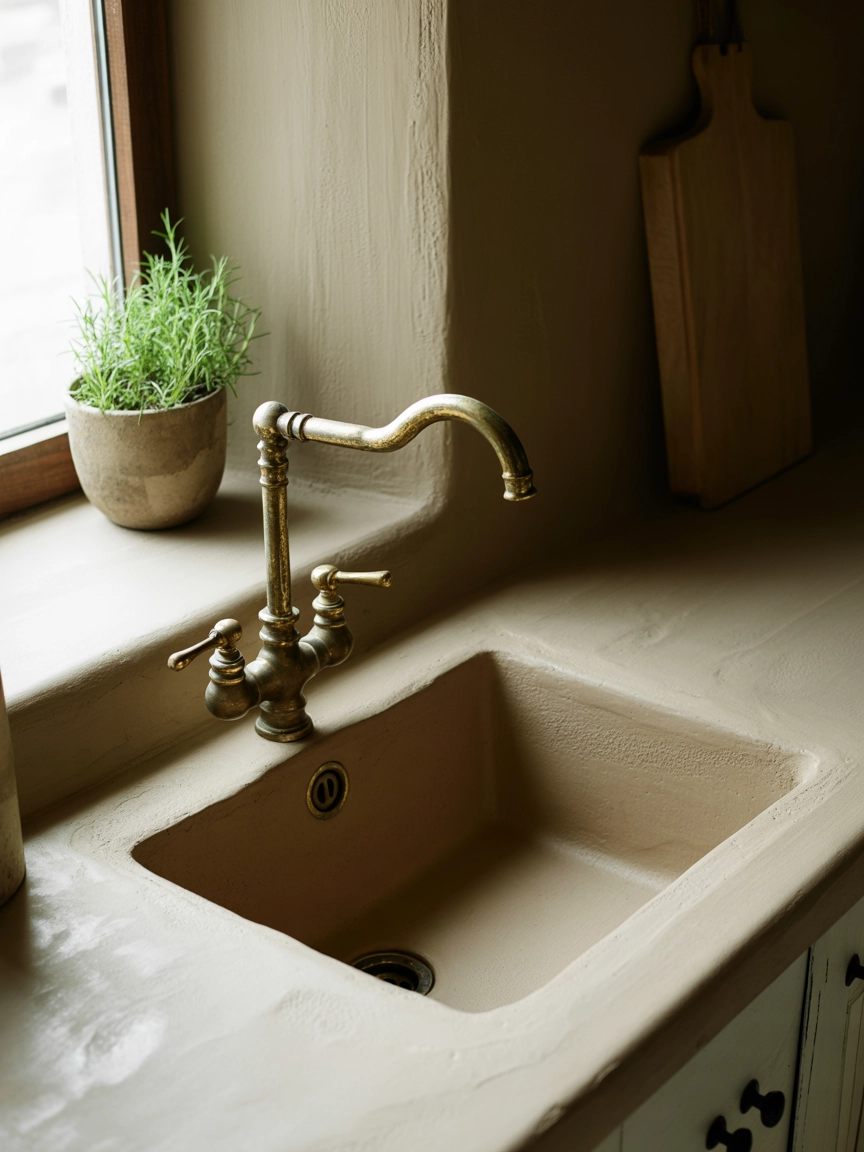
This Wabi Sabi kitchen corner showcases the beauty of simplicity with a hand-built clay sink that exudes rustic charm. The patinated brass faucet adds a touch of elegance while maintaining the overall organic feel of the space.
On the windowsill, a single, imperfectly potted herb brings life and color to the kitchen, emphasizing the connection between nature and culinary arts. The walls are finished with a lime wash paint that exhibits subtle variations in color and texture, further enhancing the aesthetic of imperfection.
The soft, natural lighting in this kitchen plays a vital role in highlighting the unique textures and tones of the materials. Each element harmonizes to create a serene environment, perfect for nurturing creativity and cooking with love.
The simplicity of the design encourages mindfulness, making it an ideal space for reflection and culinary exploration.
- Choose a hand-crafted clay sink for a unique focal point.
- Opt for a patinated brass faucet to enhance a vintage feel.
- Incorporate houseplants to bring vibrancy and life to the space.
- Use lime wash for walls to achieve a soft, textured finish.
3. Mismatched Dining with a Repurposed Table
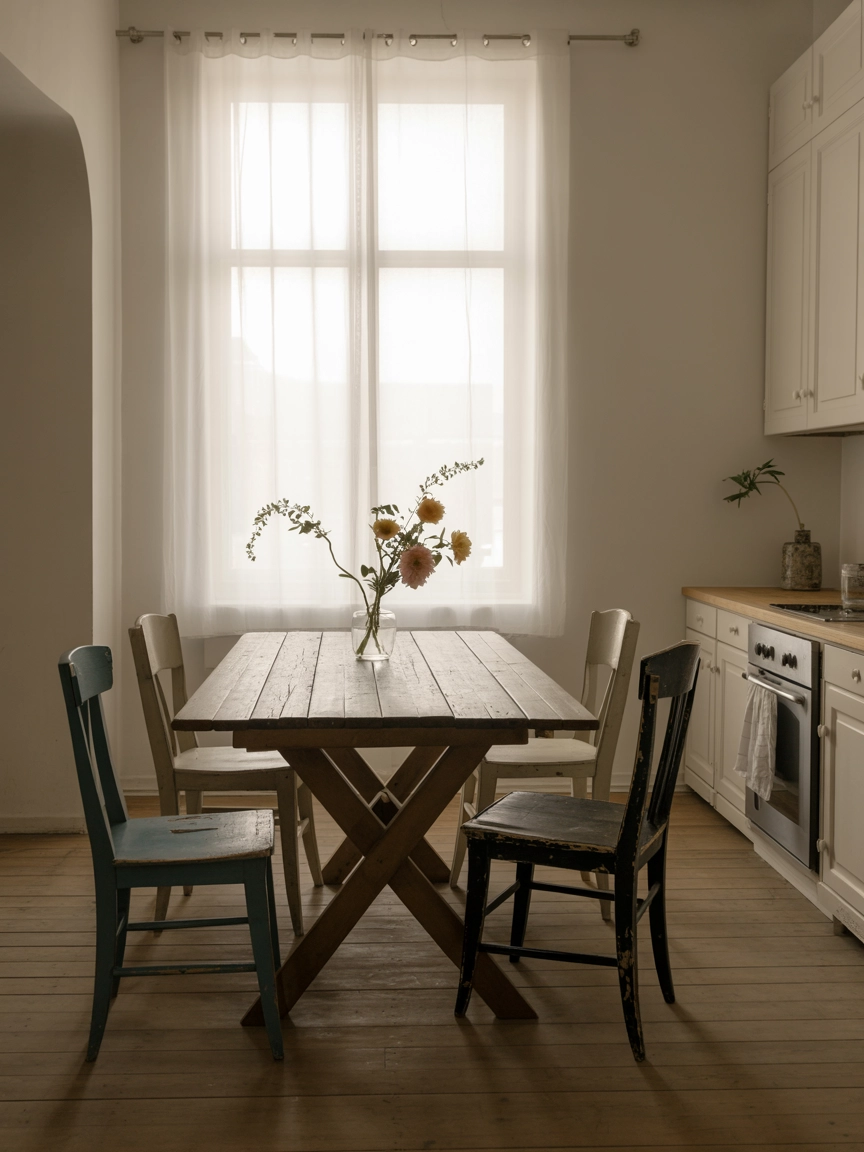
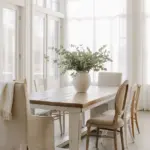
In this Wabi Sabi kitchen, a repurposed wooden table serves as the heart of the dining area, surrounded by mismatched chairs that boast worn paint and unique characteristics. This eclectic arrangement adds personality and warmth to the space, inviting guests to gather around for meals and conversations.
A single, asymmetrical flower arrangement sits in the center of the table, embodying the philosophy of Wabi Sabi by celebrating imperfection and natural beauty. Soft, diffused light flows in from a nearby window, creating a cozy and welcoming atmosphere.
The mixture of textures and colors in this dining area fosters a sense of comfort and intimacy, encouraging a casual dining experience. Each chair and piece of decor tells a story, contributing to the overall narrative of the space.
The kitchen becomes a hub for connection and creativity, where meals are shared, and memories are made.
- Utilize a repurposed table for a sustainable and unique touch.
- Select mismatched chairs to create an eclectic and inviting atmosphere.
- Incorporate asymmetrical floral arrangements for a natural centerpiece.
- Maximize soft lighting to create a warm and inviting environment.
4. Hand-Built Cabinets from Reclaimed Wood
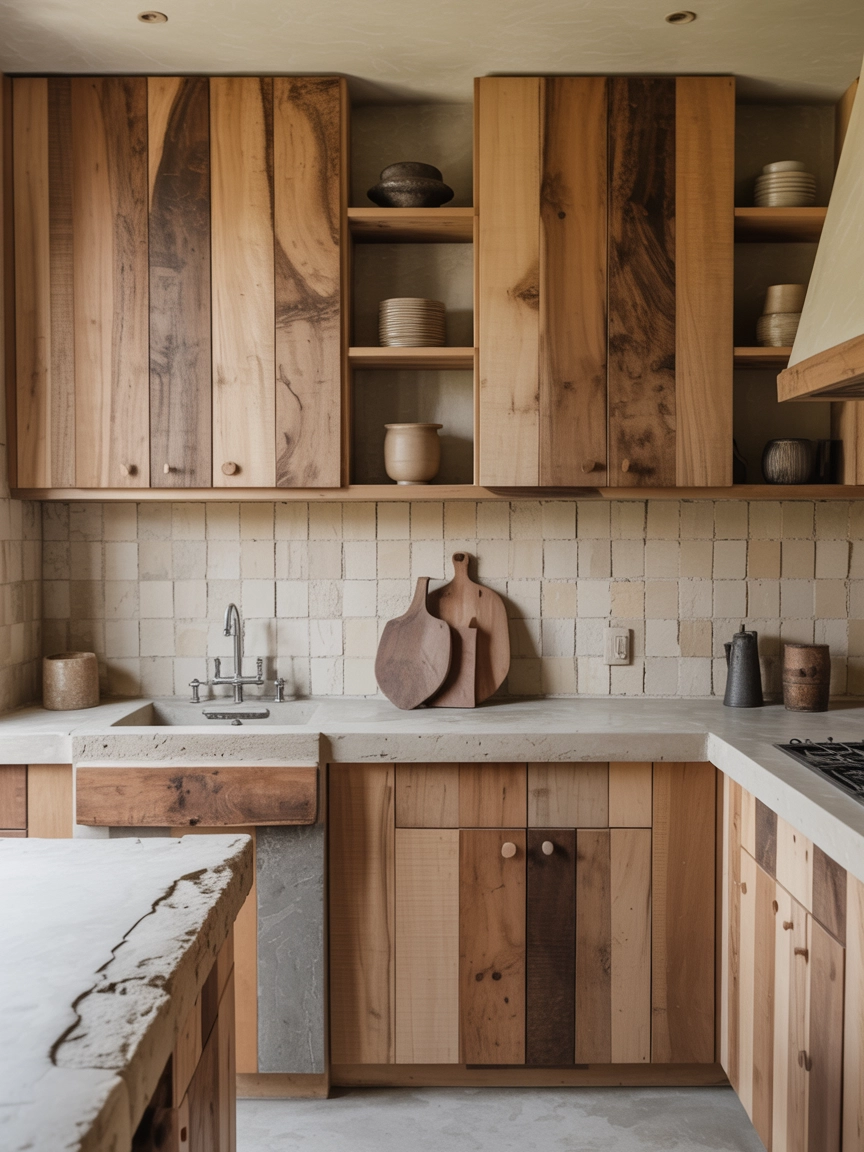
This Wabi Sabi kitchen features hand-built cabinets crafted from reclaimed wood, showcasing visible knots and grain that add character and authenticity to the design. The countertop, made of natural stone with uneven edges, complements the rustic charm of the cabinets, while a simple, unglazed ceramic tile backsplash adds texture and visual interest.
The overall design embodies the beauty of nature, inviting a sense of peace and connection to the environment.
The unique qualities of the reclaimed wood and natural stone create a harmonious balance within the kitchen, emphasizing the beauty found in imperfection. Natural lighting floods the space, enhancing the textures and tones of each material while creating an inviting atmosphere that encourages culinary exploration and creativity.
- Opt for handcrafted cabinets to add a personal touch to your kitchen.
- Use natural stone countertops for a timeless and organic feel.
- Incorporate unglazed ceramic tiles for a rustic backsplash.
- Enhance natural lighting to highlight the unique textures of materials.
5. Organically Shaped Ceramic Pendant Lights
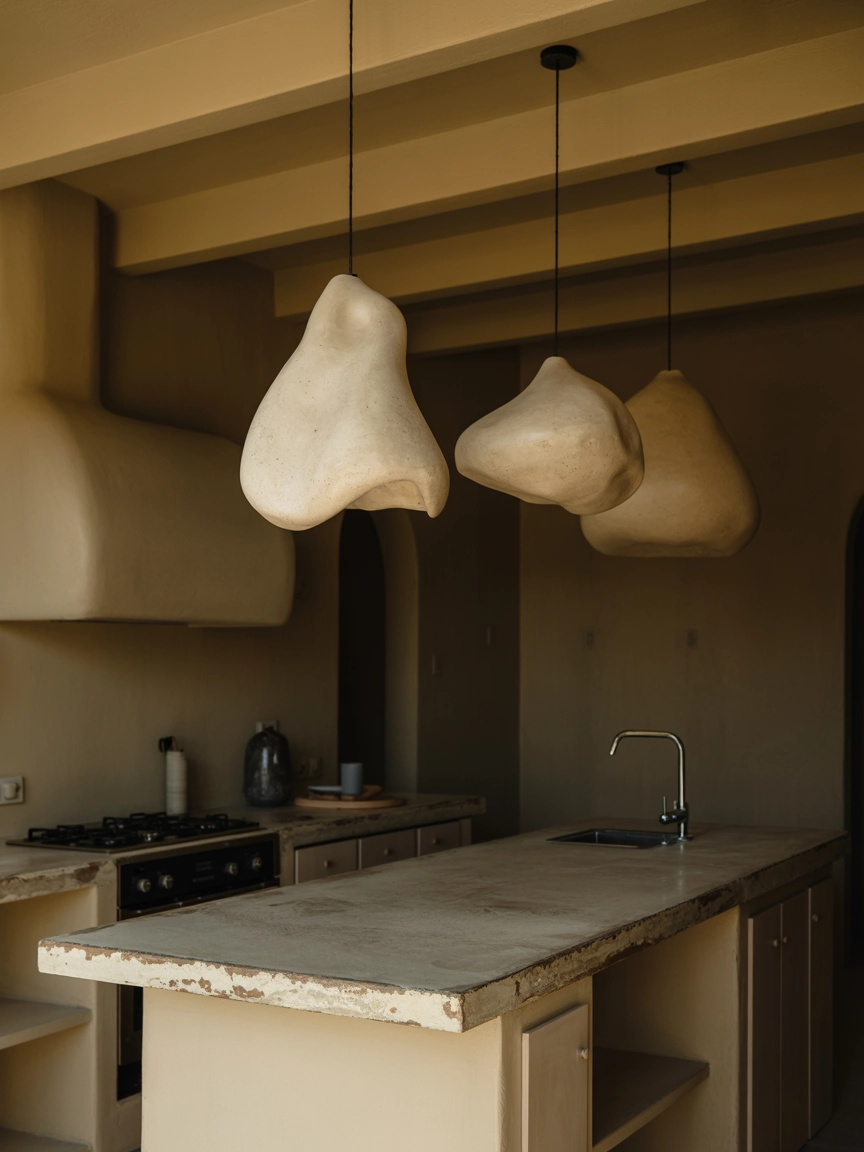
This Wabi Sabi kitchen beautifully showcases organically shaped, handmade ceramic pendant lights hanging gracefully above a central island. The island itself, made of unfinished wood with visible wear and tear, embodies the essence of Wabi Sabi, celebrating the beauty of the natural and unrefined.
The surrounding walls, painted in muted earth tones, provide a calming backdrop that complements the warmth of the wooden island and the soft glow of the pendant lights.
The combination of these elements creates a soothing ambiance, perfect for both cooking and entertaining. The handmade pendant lights serve as artistic focal points, drawing attention to the craftsmanship and individuality of each piece.
In this kitchen, functional design meets artistic expression, resulting in a space that feels both inviting and inspiring.
- Choose handmade ceramic lights for a unique and artistic touch.
- Use unfinished wood for the central island to highlight its natural beauty.
- Opt for earth-toned wall colors to create a calming environment.
- Maximize soft lighting to enhance the cozy atmosphere of the kitchen.
6. A Collection of Vintage Wooden Cutting Boards
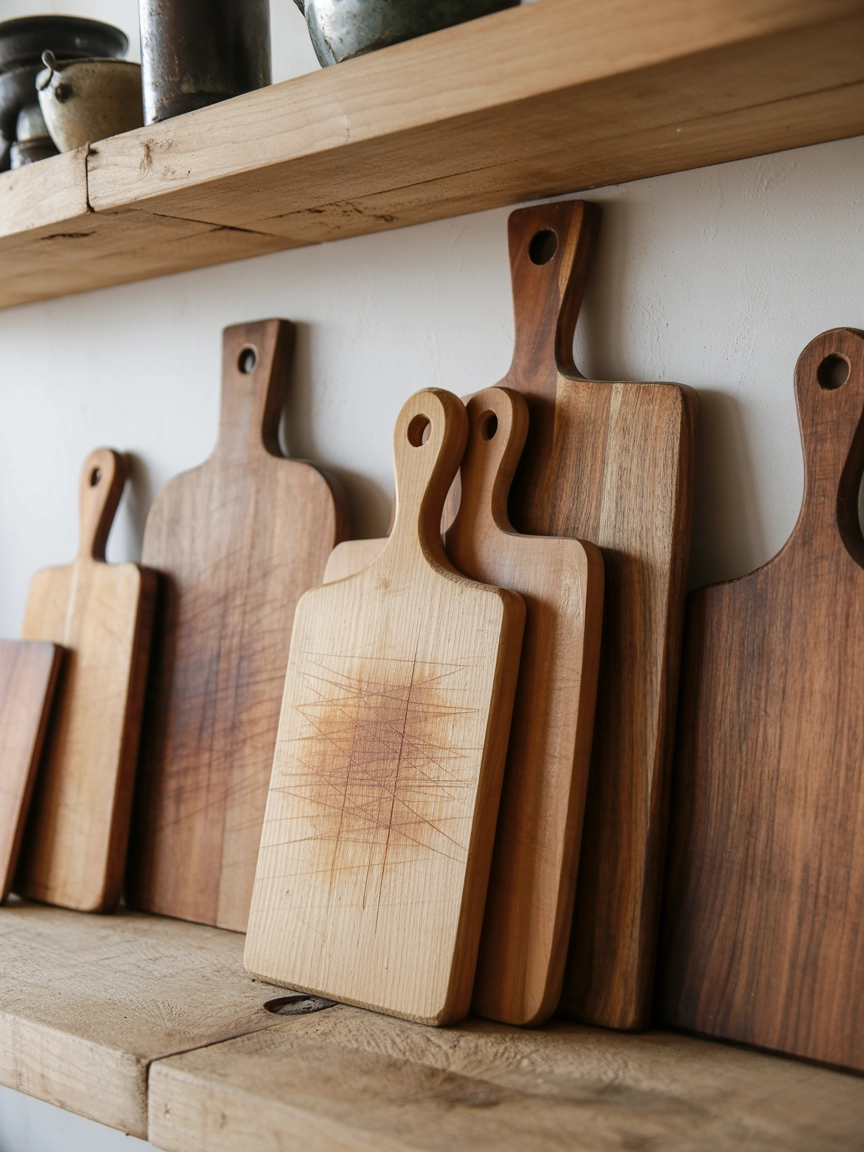
This Wabi Sabi kitchen features a stunning collection of vintage wooden cutting boards displayed on an open shelf, each board varying in size, shape, and texture. The visible knife marks and stains tell stories of meals prepared and shared, celebrating the journey of food in the home.
The shelf itself is made of raw, unfinished wood, further emphasizing the beauty of natural materials.
The warmth of the wooden cutting boards contrasts beautifully with the rawness of the shelf, creating an inviting and rustic kitchen setting. This design not only serves a practical purpose but also acts as a visual testament to the art of cooking and the importance of craftsmanship in everyday life.
Every time one enters this kitchen, they are reminded of the beauty found in simplicity and utility.
- Display vintage cutting boards for a practical yet artistic decor element.
- Use raw, unfinished wood shelves to emphasize rustic charm.
- Incorporate various shapes and sizes to create visual interest.
- Highlight imperfections to celebrate the beauty of everyday objects.
7. A Simple Clay Pot on the Windowsill
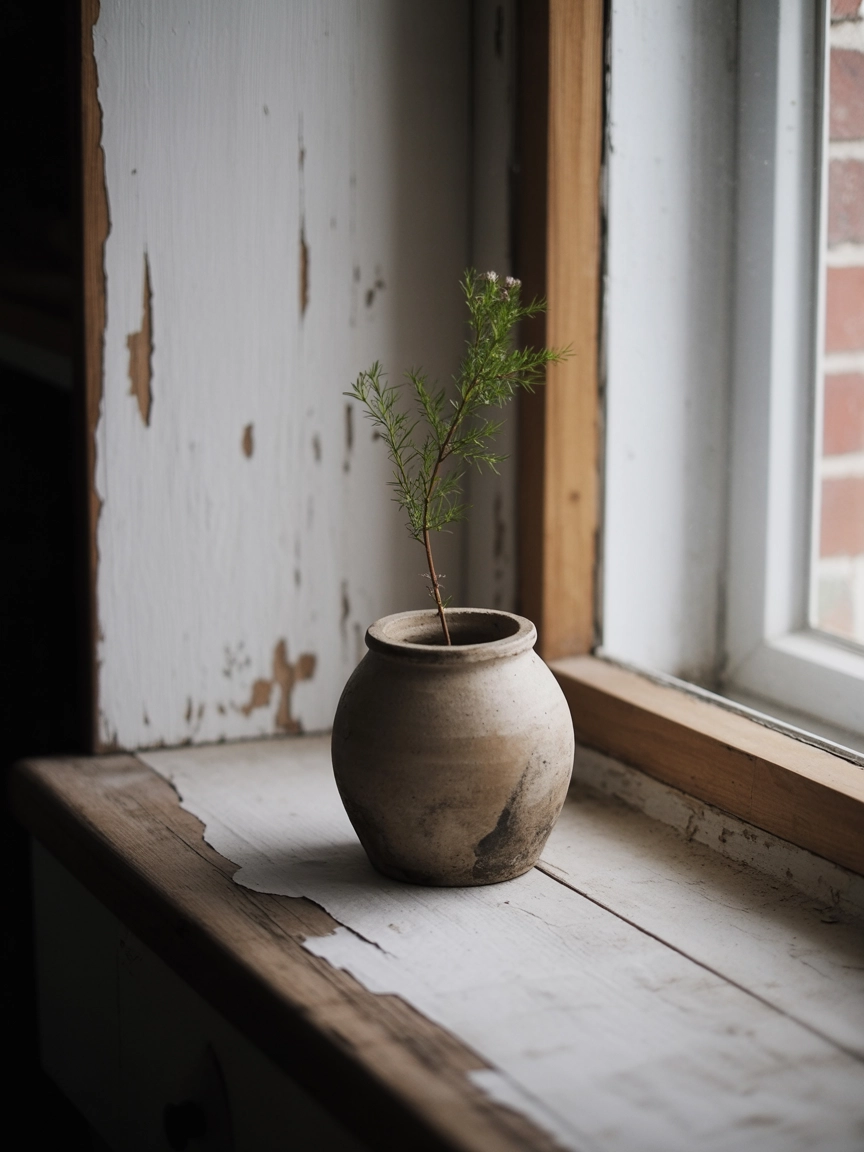
This Wabi Sabi kitchen features a simple, unadorned clay pot holding a single sprig of greenery on the windowsill, adding a touch of life to the space. The windowsill itself, made of aged wood with peeling paint, adds character and history to the kitchen, enhancing the overall aesthetic of imperfection.
Soft shadows dance across the surfaces, drawing attention to the texture details of the clay pot and the weathered wood.
This minimalist approach highlights the beauty of simplicity and the importance of incorporating natural elements into the kitchen design. The single sprig of greenery serves as a reminder of the connection between nature and our daily lives, inviting a sense of calm and tranquility into the space.
In this kitchen, every detail matters, and the focus is on celebrating the ordinary.
- Choose unadorned clay pots for a minimalist and organic touch.
- Use aged wood for windowsills to add character and history.
- Incorporate natural greenery to bring life into the kitchen.
- Highlight soft shadows to emphasize texture and detail.
8. A Worn Wooden Pantry Door
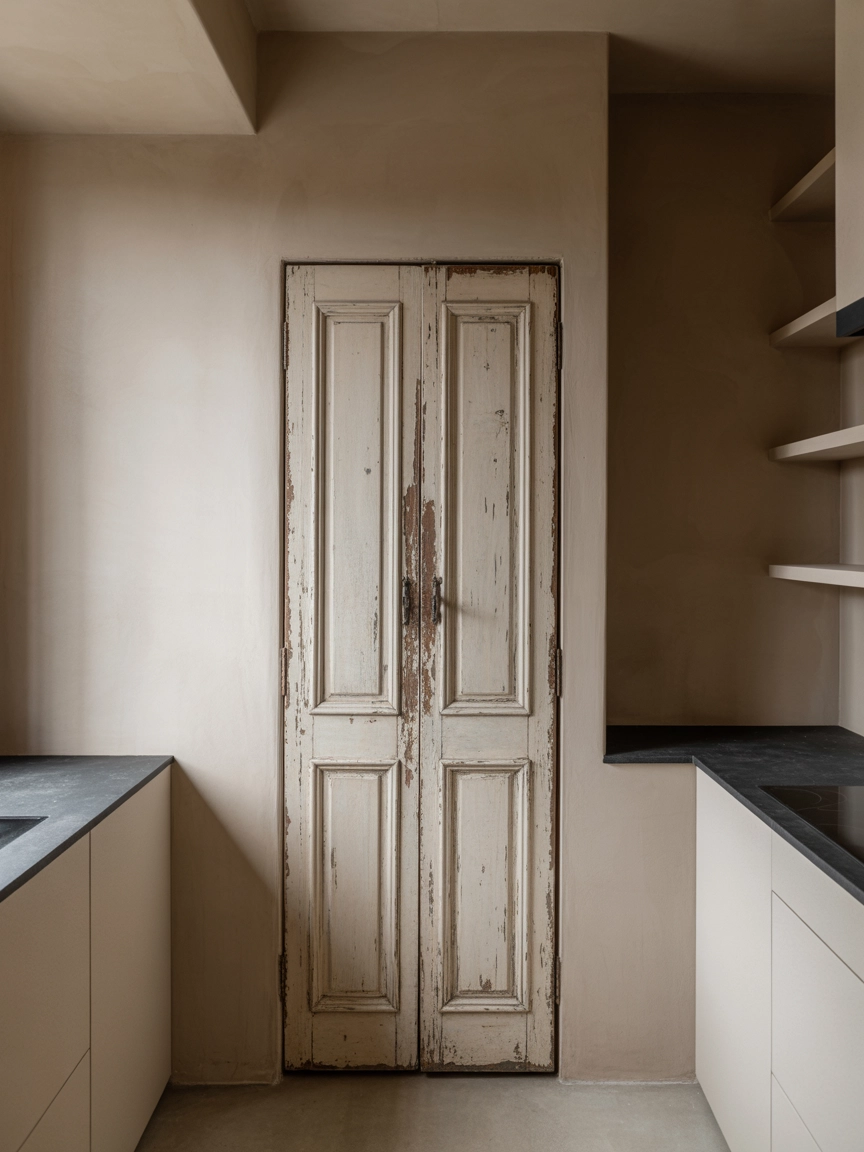
In this Wabi Sabi kitchen, a worn wooden pantry door showcases visible scratches and imperfections, telling the story of its use over time. Painted with a faded, muted color, the door adds a touch of nostalgia and warmth to the design.
The surrounding walls, finished with a textured plaster, complement the door’s rustic charm, creating a cohesive and inviting atmosphere.
The pantry door serves as a functional element while also acting as a decorative feature that enhances the overall aesthetic. This combination of textures and colors creates a rich visual experience, reminding us to appreciate the beauty found in the everyday elements of our lives.
In this kitchen, the imperfections of the door become a focal point, celebrating the journey of the home and its inhabitants.
- Choose a worn wooden door to add character and history to your kitchen.
- Opt for muted paint colors to emphasize a vintage feel.
- Incorporate textured plaster for a tactile quality.
- Highlight scratches and imperfections to celebrate the story behind each piece.
9. Mismatched Antique Utensils
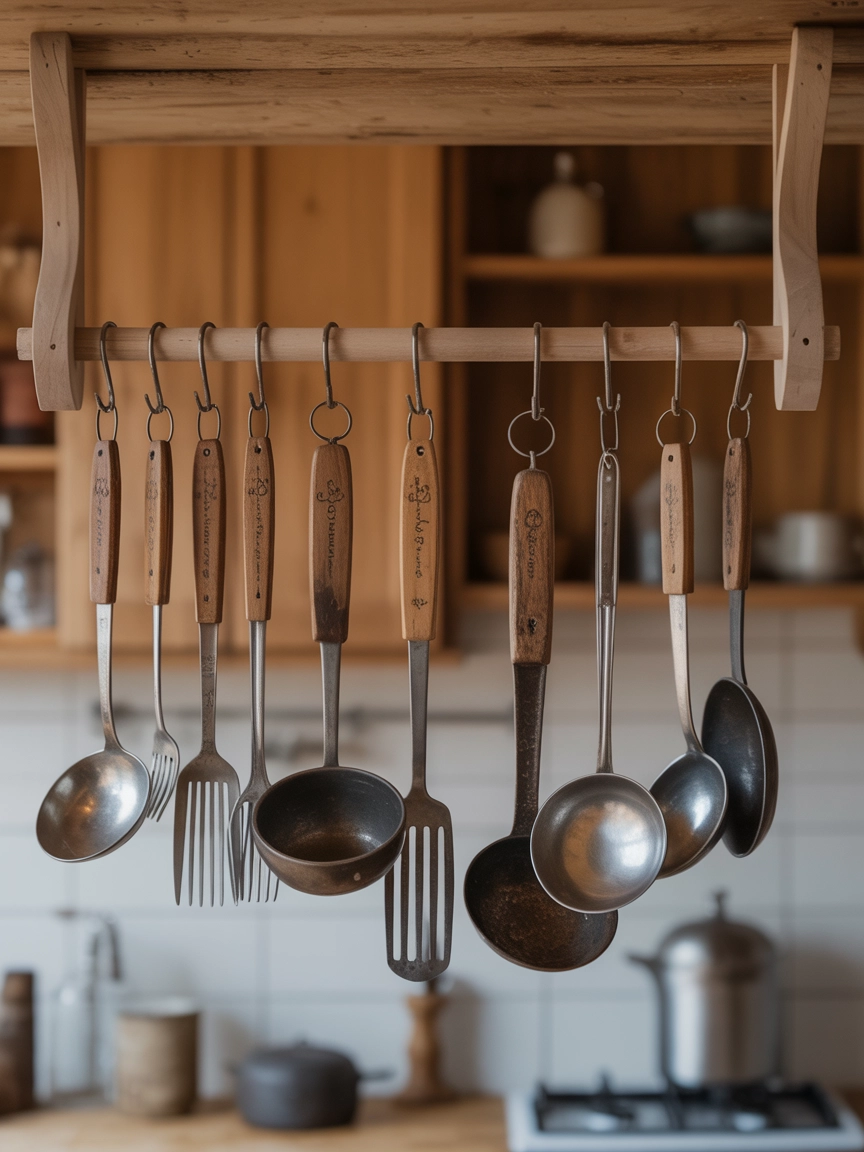
This Wabi Sabi kitchen showcases a delightful collection of mismatched antique utensils hanging from a simple wooden rack. Each utensil, made from various materials including wood, metal, and ceramic, adds layers of texture and history to the design.
The unfinished wood rack complements the eclectic nature of the utensils, creating a visually appealing and functional display.
The arrangement of these utensils serves not only as a practical storage solution but also as a testament to the artistry of culinary tools. The varying materials and styles create a rich tapestry of history and character, transforming the kitchen into a space that celebrates the beauty of diversity and craftsmanship.
In this kitchen, every utensil has a story, inviting users to engage in the art of cooking with a sense of appreciation and joy.
- Display mismatched utensils for a charming and eclectic touch.
- Use an unfinished wooden rack to enhance the rustic aesthetic.
- Incorporate various materials to create depth and interest.
- Celebrate the artistry of culinary tools by showcasing them as decor.
10. Imperfectly Shaped Ceramic Bowl
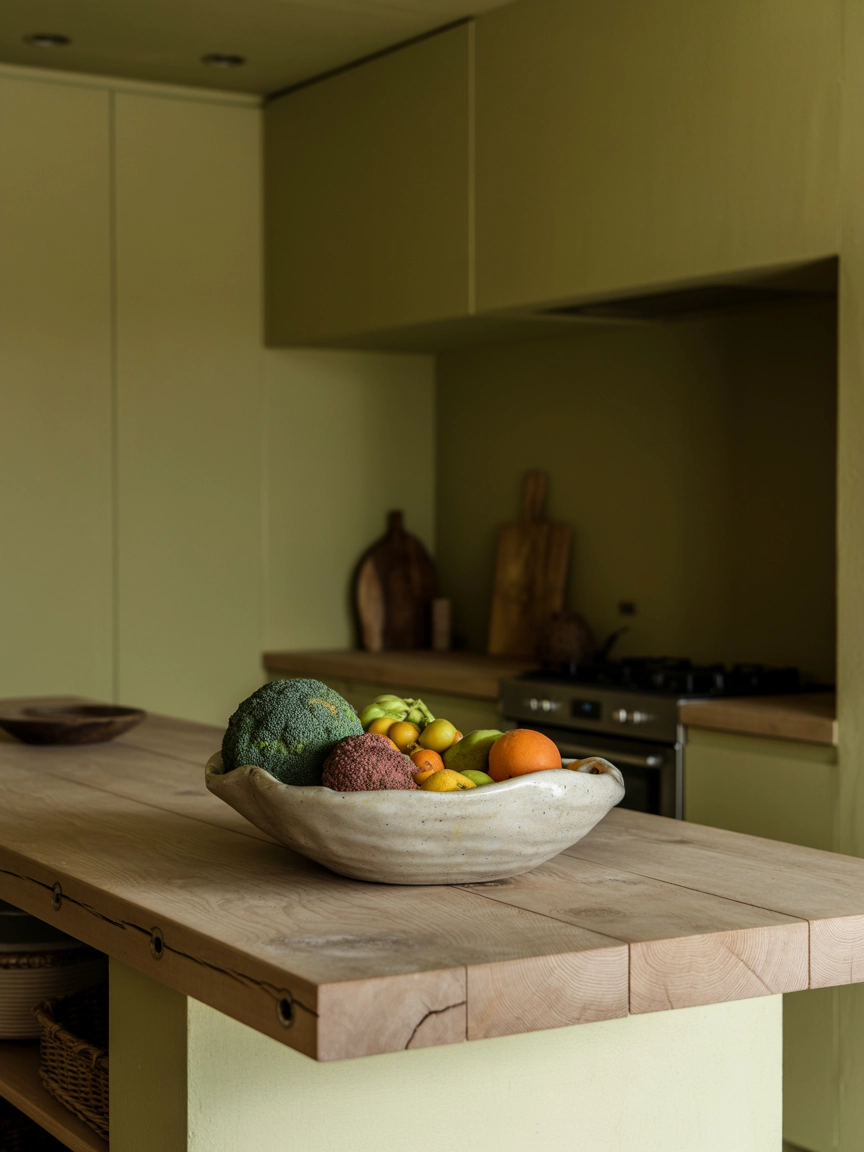
This Wabi Sabi kitchen features a large, imperfectly shaped ceramic bowl filled with locally sourced fruits and vegetables, serving as both a functional piece and an artistic centerpiece on the kitchen island. The island, made of reclaimed wood with visible imperfections, complements the organic feel of the bowl, creating a harmonious balance within the space.
The surrounding walls are finished with lime wash paint, adding a soft texture that enhances the overall aesthetic.
The combination of the ceramic bowl and the reclaimed wood island embodies the essence of Wabi Sabi, celebrating the beauty of nature and the artistry of handmade objects. This kitchen invites users to engage with their food in a more meaningful way, fostering a connection to the ingredients and the process of cooking.
Every element in this kitchen is a reminder of the beauty of imperfection and the richness of life.
- Opt for a large, uniquely shaped ceramic bowl to serve as a focal point.
- Use reclaimed wood for the island to celebrate sustainability and character.
- Incorporate locally sourced produce to emphasize a connection to nature.
- Finish walls with lime wash paint for a soft, textured look.
In conclusion, the Wabi Sabi aesthetic offers a refreshing perspective on kitchen design, encouraging us to embrace imperfection and celebrate the beauty of the natural world. Each design concept explored in this article showcases the unique qualities of materials, textures, and colors, creating spaces that are both functional and inspiring.
By incorporating these ideas into your own kitchen, you can create an environment that reflects your personality and values, while also fostering a deeper connection to the art of cooking and the joy of shared meals. So, take a moment to explore the beauty of imperfection in your own home and let your kitchen tell its own story.