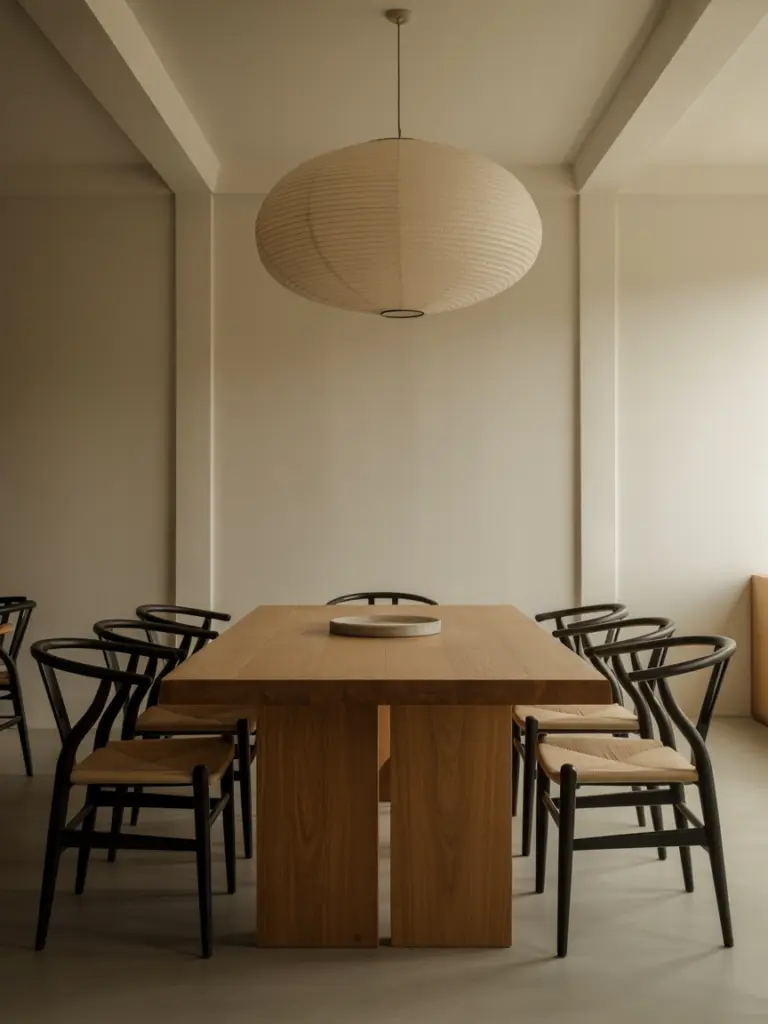

The essence of thoughtful interior design lies in its ability to create spaces that are not only functional but also inspiring. Among the myriad of styles available, Japandi stands out as a harmonious blend of Japanese minimalism and Scandinavian functionality.
This design philosophy caters to various personalities and lifestyles, promoting tranquility and simplicity in our daily lives. In this article, we will explore ten unique Japandi dining room concepts, each showcasing the beauty of natural materials, soft lighting, and an overall sense of calm.
From intimate settings perfect for cozy dinners to larger spaces designed for entertaining, the designs we will delve into highlight the uniqueness of the Japandi style. Each concept emphasizes the significance of texture, color, and the interplay of light, inviting readers to envision how these elements can transform their own dining areas into serene retreats.
Let’s embark on this journey to discover the best of Japandi dining room design.
1. Minimalist Elegance with Solid Oak
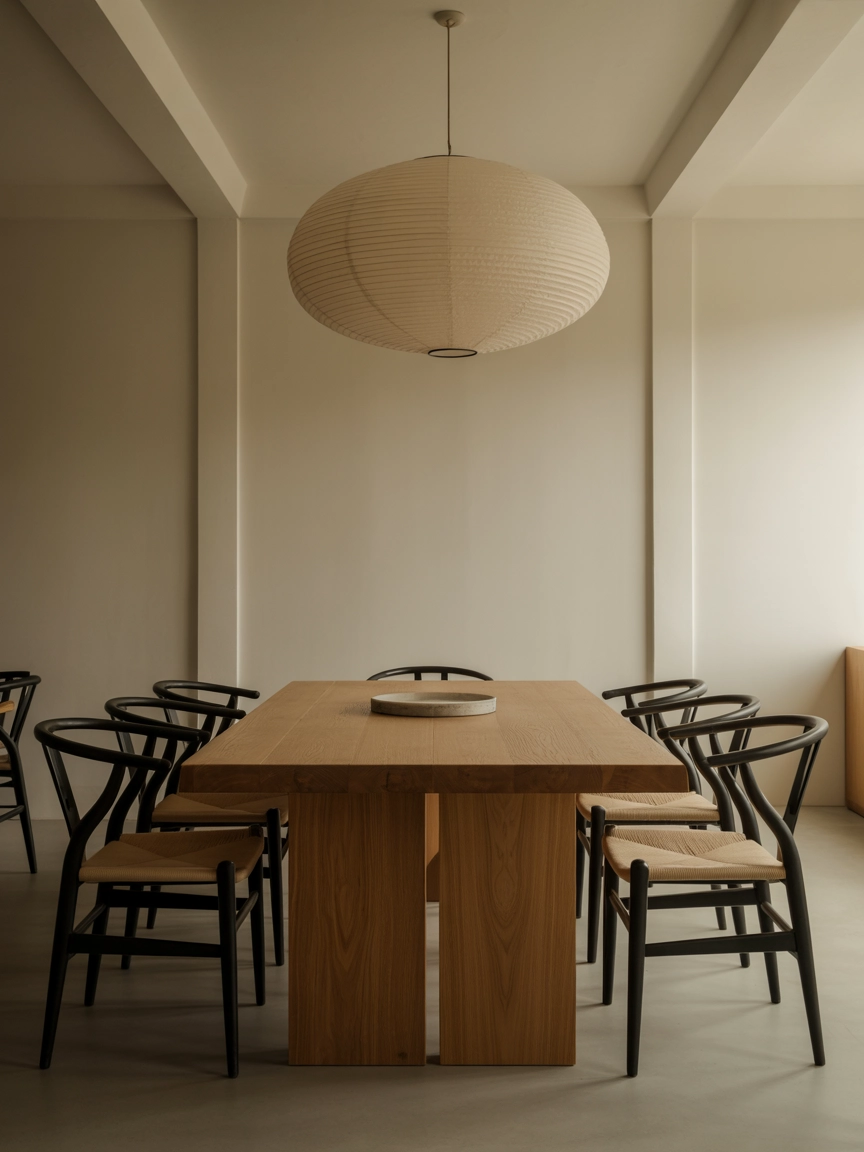
Imagine stepping into a dining room where a solid oak rectangular table commands attention with its natural finish, embodying the very essence of Japandi design. This minimalist space features six simple, black Wishbone chairs that perfectly complement the table’s rich texture.
Above, a single, low-hanging paper lantern casts a soft, diffused light, creating an inviting atmosphere ideal for gatherings.
The walls, painted in a warm off-white, serve as a subtle backdrop, enhancing the natural beauty of the oak while promoting a sense of openness. The interplay of textures is evident in the smooth wood of the table against the gentle curves of the paper lantern and the understated elegance of the black chairs.
This dining room encapsulates a sense of calm and simplicity, fostering an environment where connections can flourish over shared meals.
- Choose solid wood for durability and natural beauty.
- Incorporate minimalist lighting to maintain a serene ambiance.
- Opt for neutral colors to enhance the feeling of spaciousness.
- Focus on comfortable seating to encourage prolonged gatherings.
2. Cozy Corner for Two
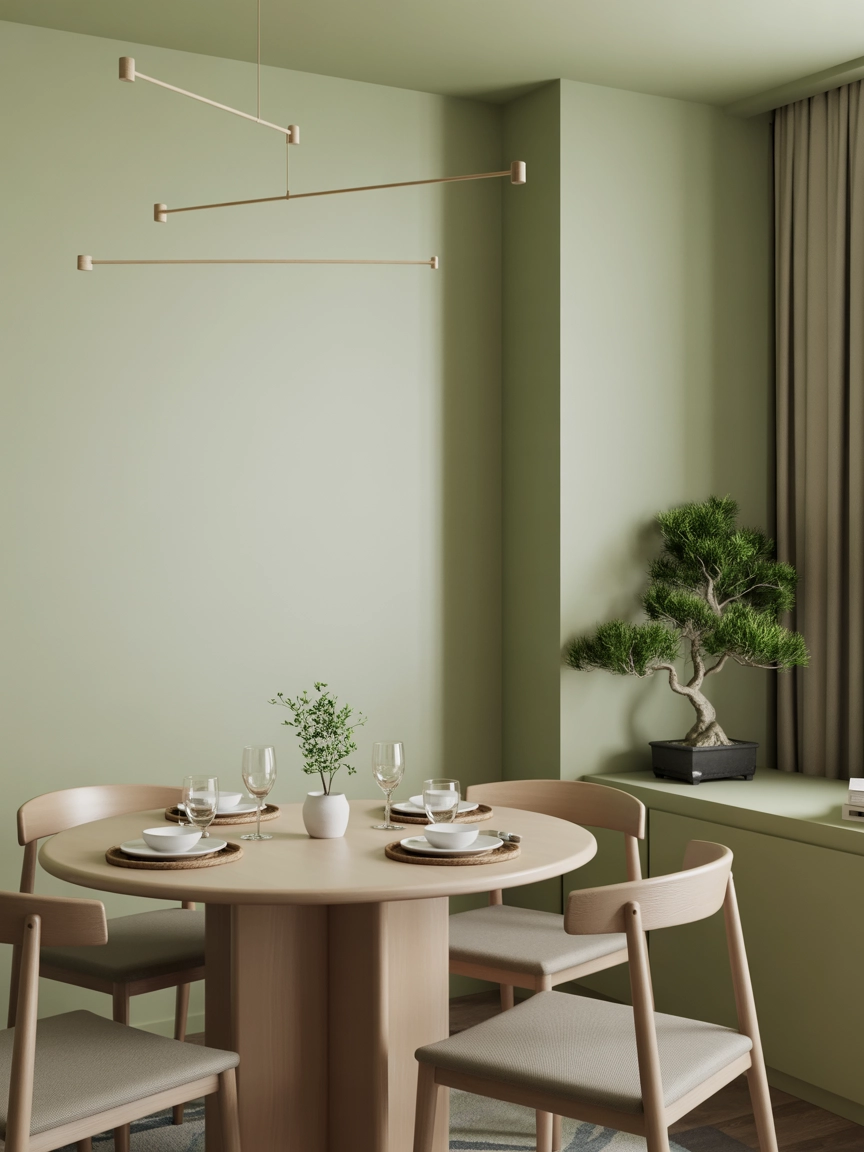
In a small apartment, every inch counts, and this Japandi dining room design maximizes space while maintaining elegance. A round, light wood dining table set for two occupies a cozy nook, offering an intimate setting for meals.
Above, a simple, geometric mobile adds visual interest without overwhelming the space, embodying the Japandi principle of “less is more.”
The walls are painted in a light, calming green, exuding tranquility and freshness, while a single potted bonsai tree on a nearby shelf introduces a touch of nature, harmonizing beautifully with the overall aesthetic. The soft diffused lighting further enhances the room’s warmth, creating an inviting atmosphere that beckons you to linger over dinner and conversation.
- Utilize round tables to create a more intimate dining experience.
- Add greenery for a natural element that promotes relaxation.
- Incorporate simple artwork to maintain a clutter-free environment.
- Opt for soft colors to make small spaces feel larger.
3. Built-in Bench Seating for Functionality
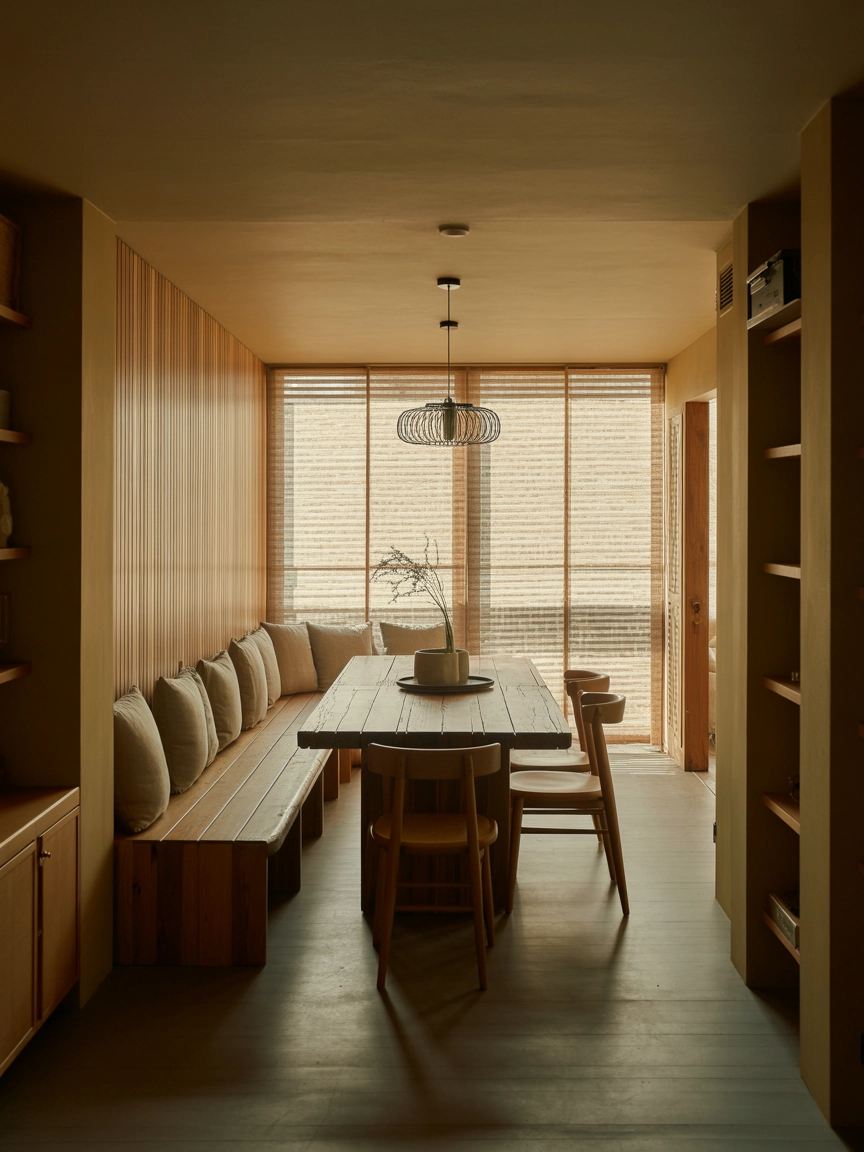
This long, narrow dining room exemplifies the functional beauty of Japandi design with its built-in bench seating. Upholstered in natural linen, the bench offers comfort while maximizing space.
Opposite the bench, a rectangular dining table made of reclaimed wood adds warmth and character, inviting you to enjoy meals in a casual yet stylish setting.
A minimalist, black metal pendant light hangs above the table, creating a focal point that draws the eye while maintaining a simple aesthetic. The interplay of light and shadow enriches the space, accentuating the textures of the wood and linen.
This dining room not only serves as a practical eating space but also as a serene retreat where family and friends can gather.
- Incorporate built-in seating to save space and enhance functionality.
- Choose reclaimed wood for a sustainable and charming table.
- Use neutral fabrics for upholstery to maintain a cohesive look.
- Focus on lighting fixtures that add character without overwhelming.
4. Dining with a View
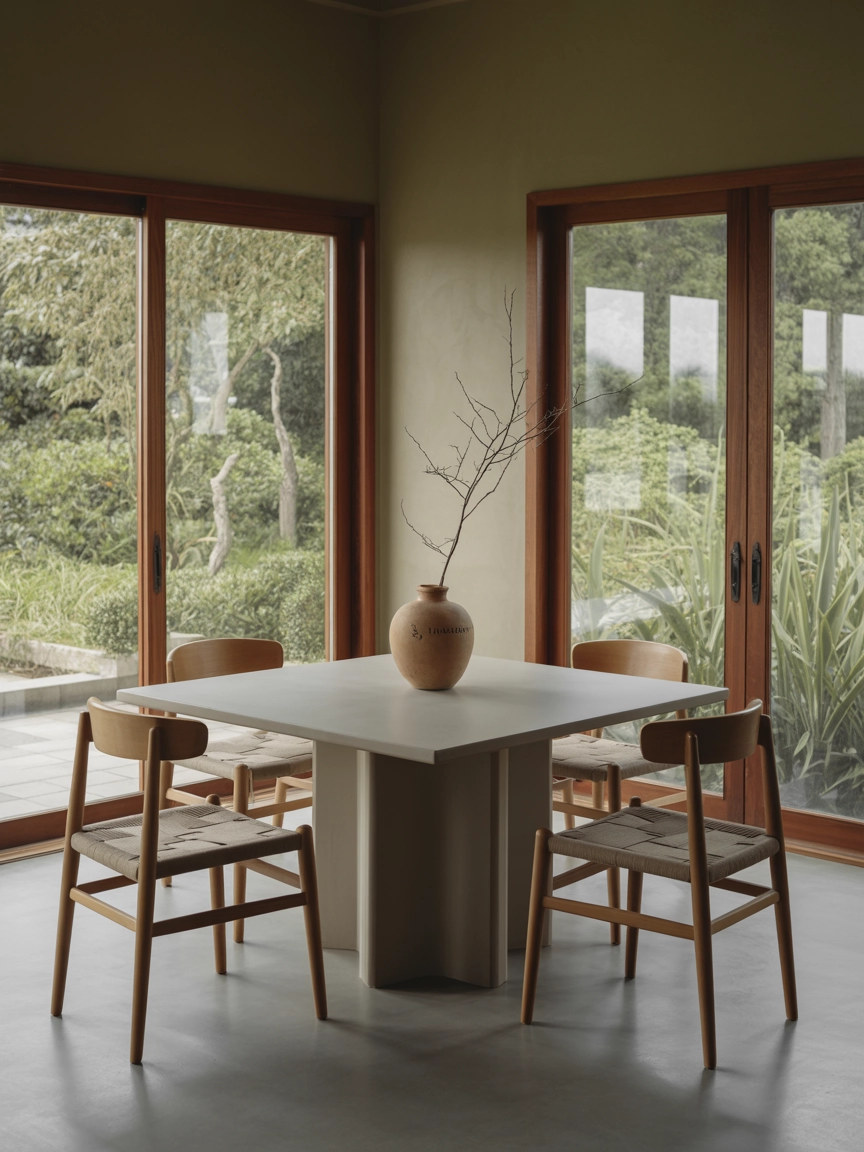
Picture a bright dining space where large windows frame a serene garden, bringing the beauty of the outdoors inside. A simple, rectangular dining table is surrounded by four wooden chairs with woven seats, echoing the natural theme of the surroundings.
The soft grey walls create a tranquil backdrop, allowing the garden view to take center stage.
A ceramic vase with a single branch serves as a minimal centerpiece, reflecting the Japandi philosophy of simplicity and appreciation for nature. This design not only promotes a connection with the outside world but also fosters a peaceful atmosphere, making every meal feel like a special occasion.
- Leverage large windows to connect indoor and outdoor spaces.
- Incorporate natural textures in furniture and decor.
- Use minimalist centerpieces to keep the focus on the view.
- Choose soft colors to complement the natural light and surroundings.
5. Dark Wood Accents for Contrast
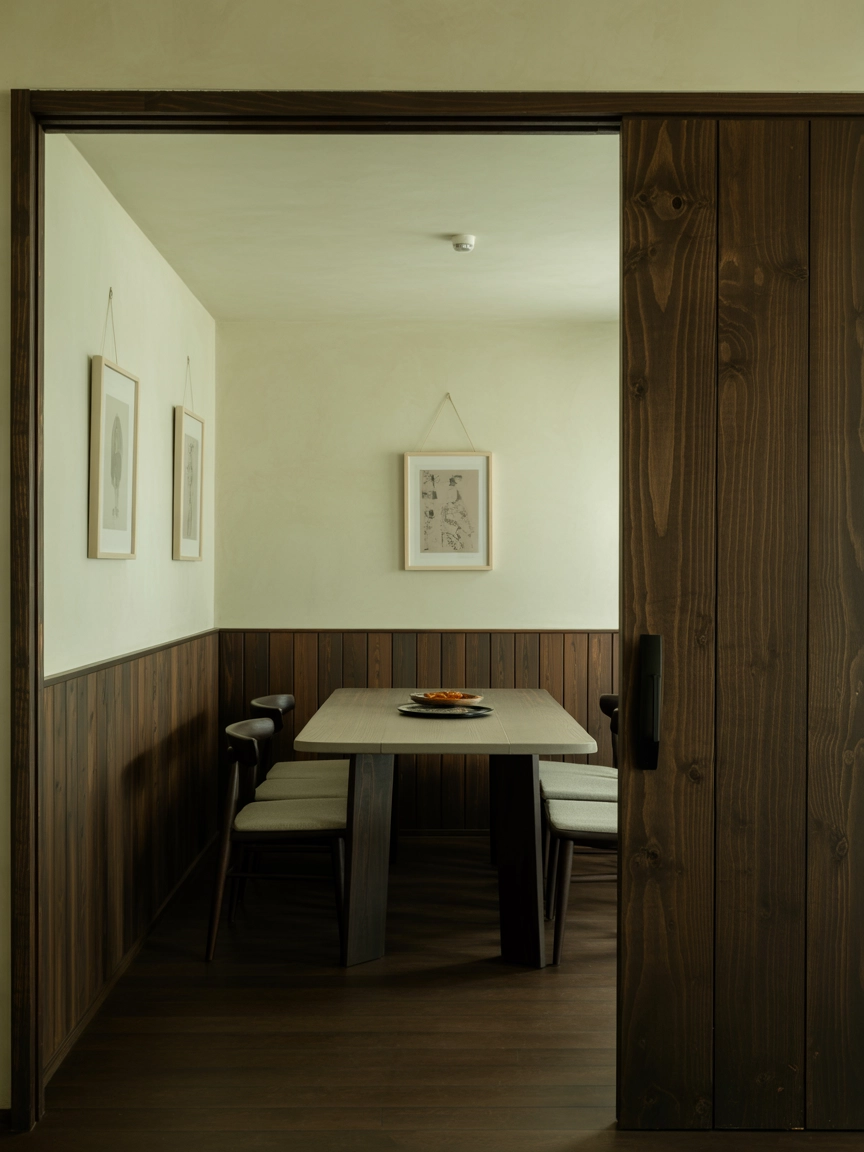
This Japandi dining room design introduces a striking contrast with a dark wood accent wall, adding depth and richness to the space. Three walls are painted a light cream, creating a bright and airy feel, while the dark paneled wall draws attention and adds a touch of sophistication.
A simple dining table with a light-colored tabletop and dark legs is centered in the room, harmonizing with the overall color scheme.
Minimalist artwork graces the cream-colored walls, enhancing the aesthetic without overshadowing the beauty of the wood textures. The soft diffused lighting creates a warm glow, inviting you to enjoy meals in this elegant yet understated environment.
This dining room exemplifies how contrasting elements can work together to create a balanced and engaging space.
- Incorporate dark accent walls to add depth and richness.
- Balance light and dark elements for a cohesive look.
- Use minimalist artwork to enhance the design without clutter.
- Focus on soft lighting to create a warm atmosphere.
6. Open Shelving for Display
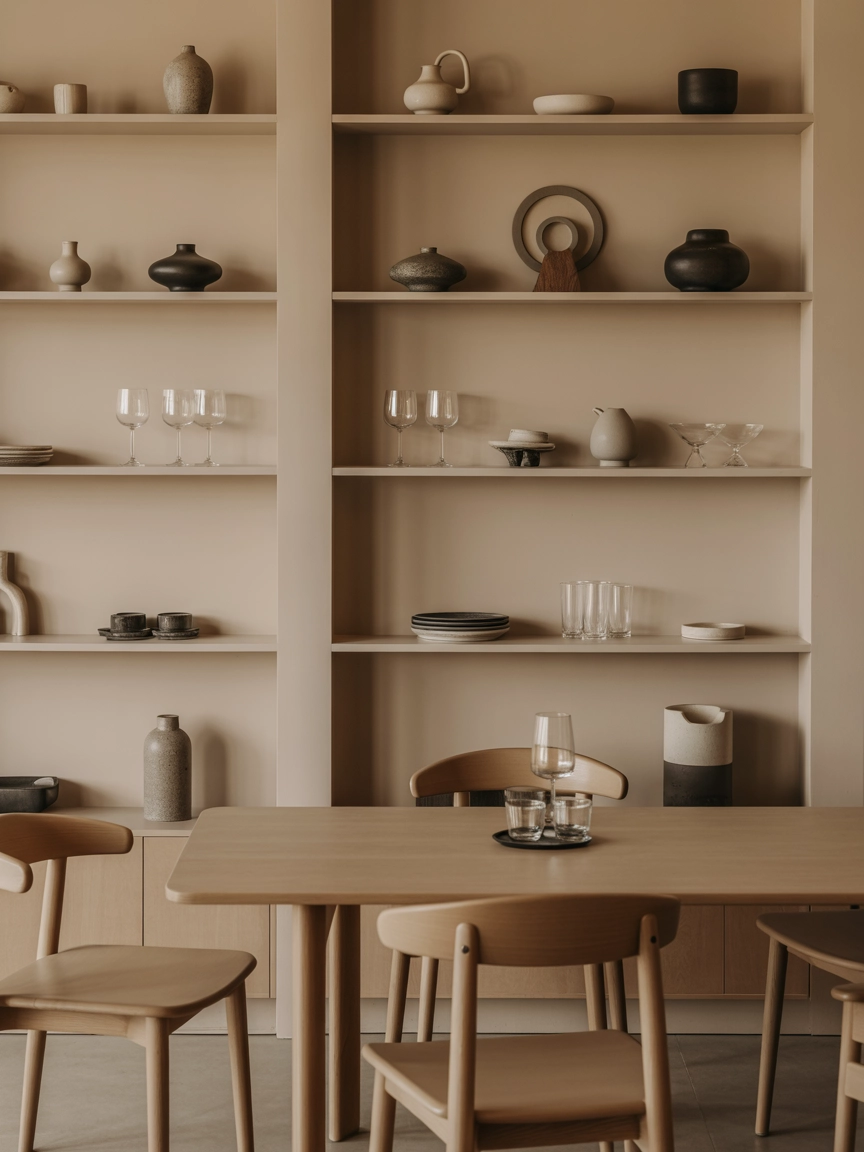
This dining area features open shelving that showcases minimalist ceramics and glassware, adding a personal touch to the space. The simple dining table made of light wood sits in front of these shelves, creating a functional yet aesthetically pleasing arrangement.
The walls are painted a calming beige, promoting a sense of relaxation and tranquility.
The open shelving not only serves as storage but also as a canvas for displaying curated items that reflect the owner’s personality. The natural lighting highlights the textures and colors of the ceramics, creating a dynamic visual experience that evolves throughout the day.
This design showcases the beauty of simplicity, encouraging the appreciation of everyday objects.
- Use open shelving to display personal items and add character.
- Choose calming colors to promote a serene dining atmosphere.
- Incorporate natural materials for a cohesive look.
- Focus on minimalism to avoid visual clutter.
7. Modern Clean Lines
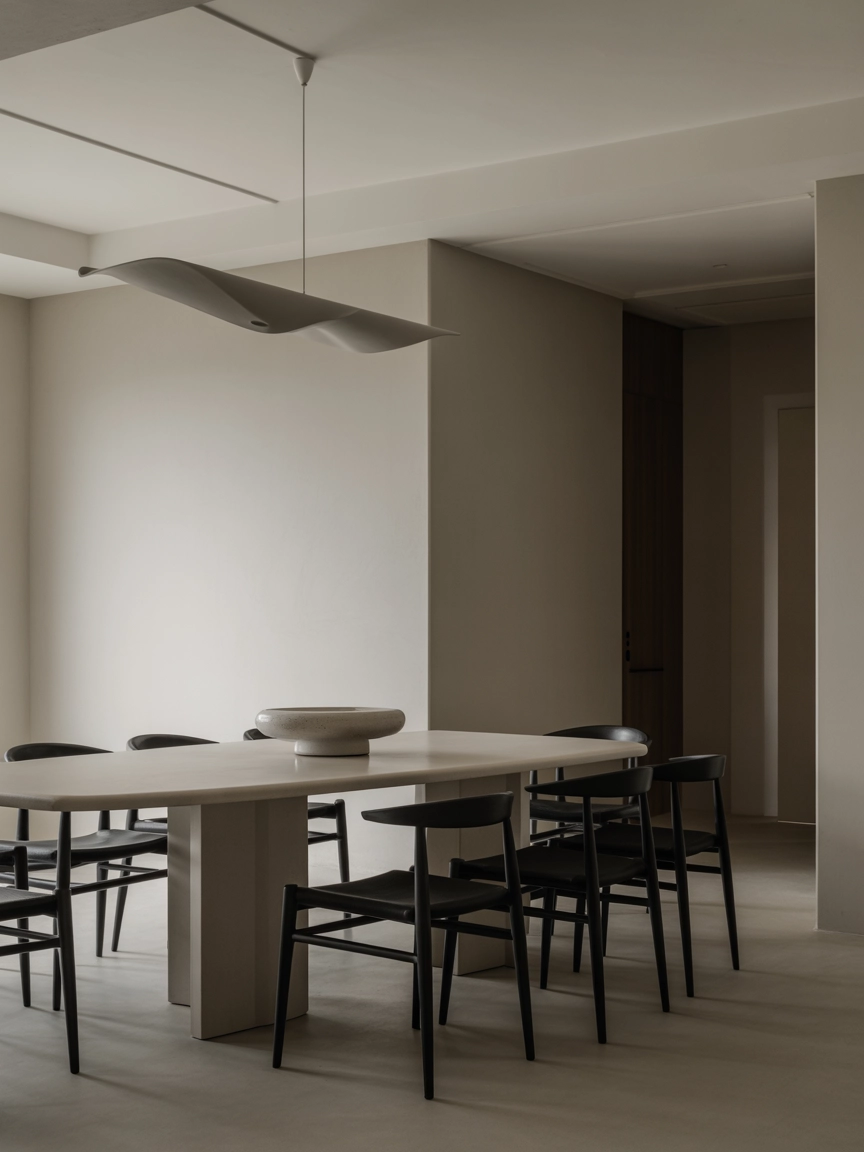
In this modern home, the dining space is characterized by clean lines and minimalist decor. A long, rectangular dining table with a smooth, white surface is paired with sleek, black chairs that enhance the contemporary feel.
Above, a single sculptural light fixture serves as a statement piece while maintaining the overall simplicity of the design.
The light grey walls provide a neutral backdrop that allows the furniture to shine while creating a sense of spaciousness. This Japandi dining room exemplifies how modern design elements can be integrated with traditional principles, resulting in a space that is both timeless and current.
The focus on clean lines and minimal ornamentation promotes a sense of calm, making it an ideal setting for meals and gatherings.
- Incorporate clean lines in furniture for a modern aesthetic.
- Use sculptural lighting to add a focal point without clutter.
- Choose neutral colors to create a spacious feel.
- Maintain minimal decor for a serene dining experience.
8. Traditional Feel with Tatami Mats
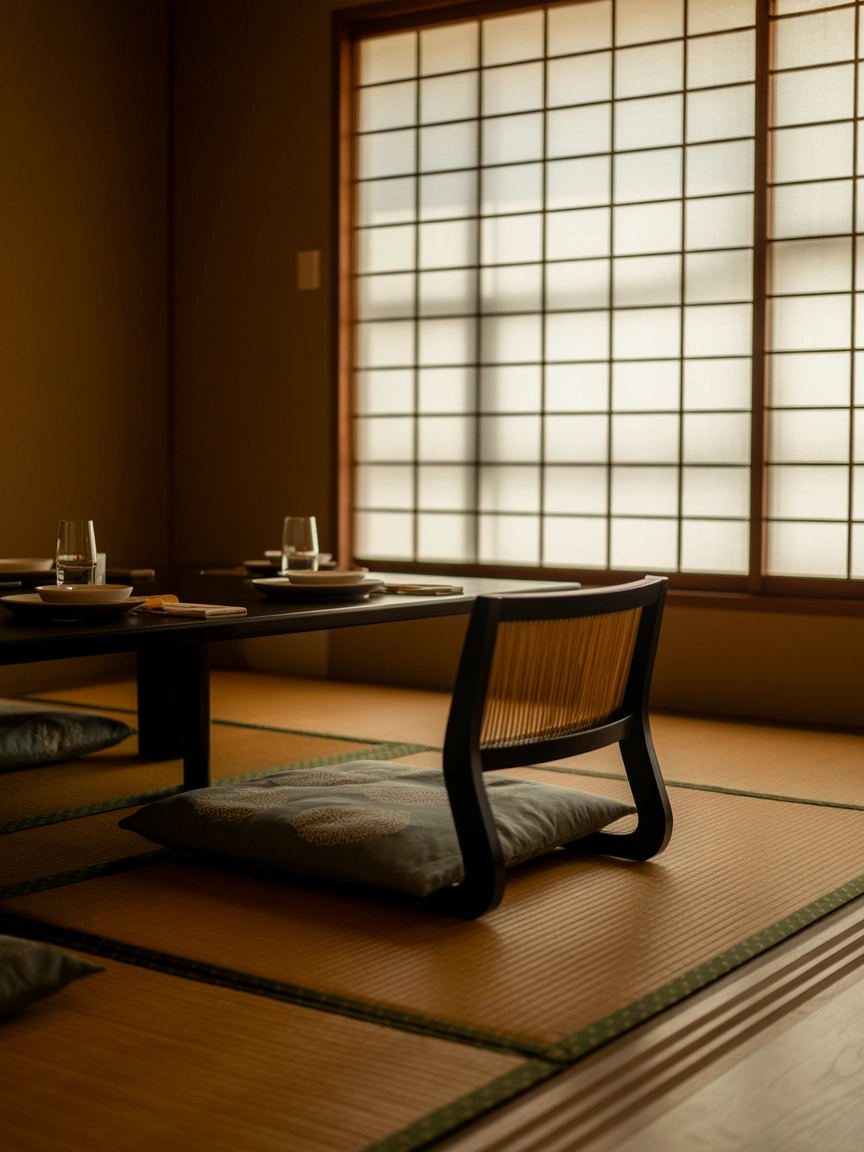
This dining room embraces a traditional Japanese feel with tatami mats covering the floor, providing a unique texture and warmth. A low dining table surrounded by cushions for seating invites a casual and intimate dining experience.
A shoji screen offers soft, filtered light, enhancing the tranquil atmosphere of the space.
The walls are painted in warm, neutral tones that complement the natural materials of the tatami mats. This design not only honors traditional Japanese aesthetics but also introduces a sense of calm and mindfulness to dining.
The combination of floor seating and natural light creates a unique experience, encouraging diners to slow down and savor each meal.
- Incorporate tatami mats for an authentic Japanese feel.
- Use low furniture to create a relaxed dining environment.
- Incorporate shoji screens to soften lighting and add privacy.
- Choose warm colors to enhance the sense of comfort.
9. Live Edge Table as a Focal Point
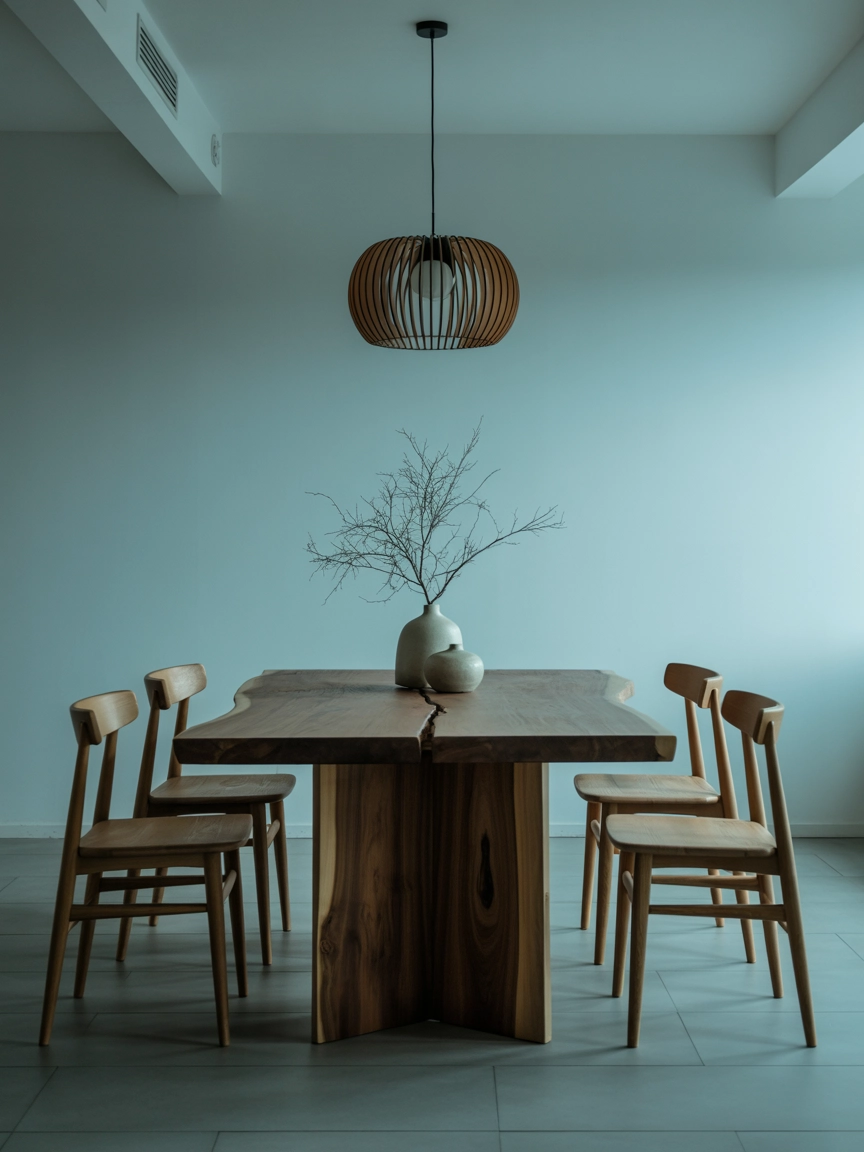
This dining room features a stunning live edge wood dining table that serves as the focal point of the space. Surrounded by simple, modern chairs, the table’s organic shape and texture create a striking contrast against the light, calming blue walls.
A minimalist pendant light hangs above, casting a warm glow that enhances the natural beauty of the wood.
The live edge detail of the table invites conversation and admiration, making it a centerpiece that tells a story. This Japandi design celebrates the beauty of nature while maintaining a clean and modern aesthetic.
The soft diffused lighting further enhances the warmth of the space, inviting guests to gather around for memorable meals.
- Utilize a live edge table for a unique and organic focal point.
- Incorporate modern chairs to balance the rustic elements.
- Choose a calming color palette to create a serene atmosphere.
- Focus on lighting that enhances the natural beauty of materials.
10. Sparsely Decorated Simplicity
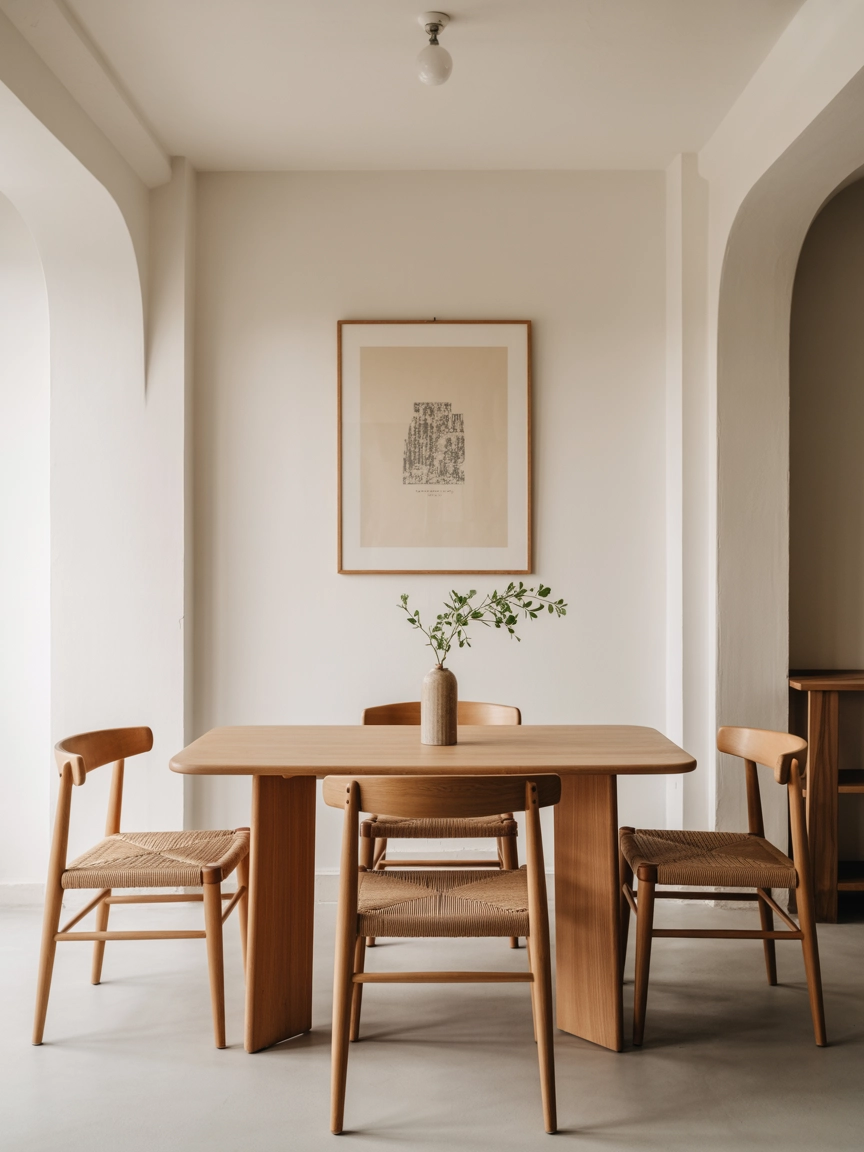
This sparsely decorated dining room emphasizes the beauty of natural light and clean lines, embodying the true spirit of Japandi design. With a simple wooden table and chairs as the only furniture, the space promotes a sense of openness and tranquility.
A single, unframed print hangs on the wall, serving as a minimalist artwork that enhances the overall aesthetic.
The walls are painted white, allowing natural light to flood the room and create an airy atmosphere. This design exemplifies how less can be more, showcasing the beauty of simplicity and natural elements.
The focus on clean lines and minimal ornamentation encourages a mindful dining experience, making it an ideal setting for enjoying meals.
- Maintain a sparse decor to enhance the feeling of openness.
- Use white walls to maximize natural light and brightness.
- Incorporate minimal artwork to add interest without clutter.
- Focus on the quality of materials to elevate the design.
In conclusion, the Japandi dining room design style offers a beautiful blend of simplicity, functionality, and warmth. By incorporating natural materials, soft lighting, and mindful decor, these concepts create inviting spaces that encourage connection and appreciation for the moment.
As you explore these ideas, consider how you can infuse elements of Japandi into your own dining area, transforming it into a serene retreat where cherished memories can be made.